The dream of Brave Biltong was born in the rugged wilderness of the American West. A landscape so vast, it has a way of putting things into perspective and helps you understand what’s actually worth protecting — in country that the BLM, the Forest Service, and generations of conservationists like TPL and 1% for the planet have fought to keep wild. We owe that landscape everything.

This Earth Day, we wanted to do something a little different with Field Notes. Instead of a route map of where we’ve been, we’re drawing a map of where Brave comes from. Every ingredient in our biltong has its own origin story and road trip behind it — its own watershed, its own farmers, its own piece of country. Let's explore it all together.
Santa Barbara, California — Bragg Apple Cider Vinegar
Anyone who’s ridden the Pacific Coast knows the stretch where Highway 101 spills out of the inland hills and meets the ocean somewhere around Gaviota. Santa Barbara sits just past it. That’s home to Bragg, a company that’s been making organic apple cider vinegar since 1912.

We tried a lot of vinegars before we landed here. Vinegar in biltong isn’t flavor — it’s a critical control point. It’s what makes the surface of the meat hostile to anything that would spoil it before the air-drying takes over. So whatever we used had to be honest. Bragg’s ACV is raw, unfiltered, unpasteurized, and made with the “mother” still in the bottle. It’s organic, the apples are grown without synthetic pesticides, and the company has spent the last decade turning parts of its orchards into pollinator havens for native bees.
Every Brave batch starts with a thin, even coating of Bragg. Roughly a quarter of an ounce per pound of trimmed beef. Subtle, but everything else depends on it.
The Sea of Cortez — Baja Gold Sea Salt
Keep heading south from California, cross into Baja, and follow the peninsula until the Pacific gives way to the Sea of Cortez. Jacques Cousteau called it “the world’s aquarium.” That’s where Baja Gold comes from. Their salt is hand-harvested at the southern end, from one of the most mineral-rich bodies of water on the planet.

Most commercial salt is stripped down to nothing but sodium chloride. Baja Gold isn’t. It’s solar-evaporated, unrefined, and it carries a full mineral profile from a sea that nature has been concentrating for millennia. You can taste the difference, there’s a roundness to it, a depth that refined salt simply doesn’t have.
In biltong, salt isn’t a finishing touch. It’s the cure. It’s the foundation of both flavor and food safety. We tested several options when we were dialing in the recipe and Baja Gold won outright. It’s in every batch, every SKU.
Eugene, Oregon — Mountain Rose Herbs
From the Sea of Cortez we head north — way north, up the spine of the West Coast, across the Siskiyous, and into the Willamette Valley. Eugene sits where the valley narrows toward the Cascades, and that’s where Mountain Rose Herbs has been quietly setting the bar for organic spice sourcing since 1987.
Mountain Rose isn’t the end of the spice journey though, it’s the hub. They source from farms all over the world and bring the spices home to Oregon, where they’re packed, certified, and shipped out with documentation behind every bag. They’re a certified B Corp, zero-waste certified, and they offset their freight emissions. From Eugene, our spices keep traveling. To get to the source of each one, you have to keep going.
Egypt and the Mediterranean — Coriander Seed
Coriander is one of the oldest cultivated spices on earth. Seeds have been found in Egyptian tombs more than three thousand years old. The plant itself is native to a band that stretches from the eastern Mediterranean across to South Asia, and most of the world’s organic coriander seed today still comes from that same belt — Egypt, Bulgaria, India.

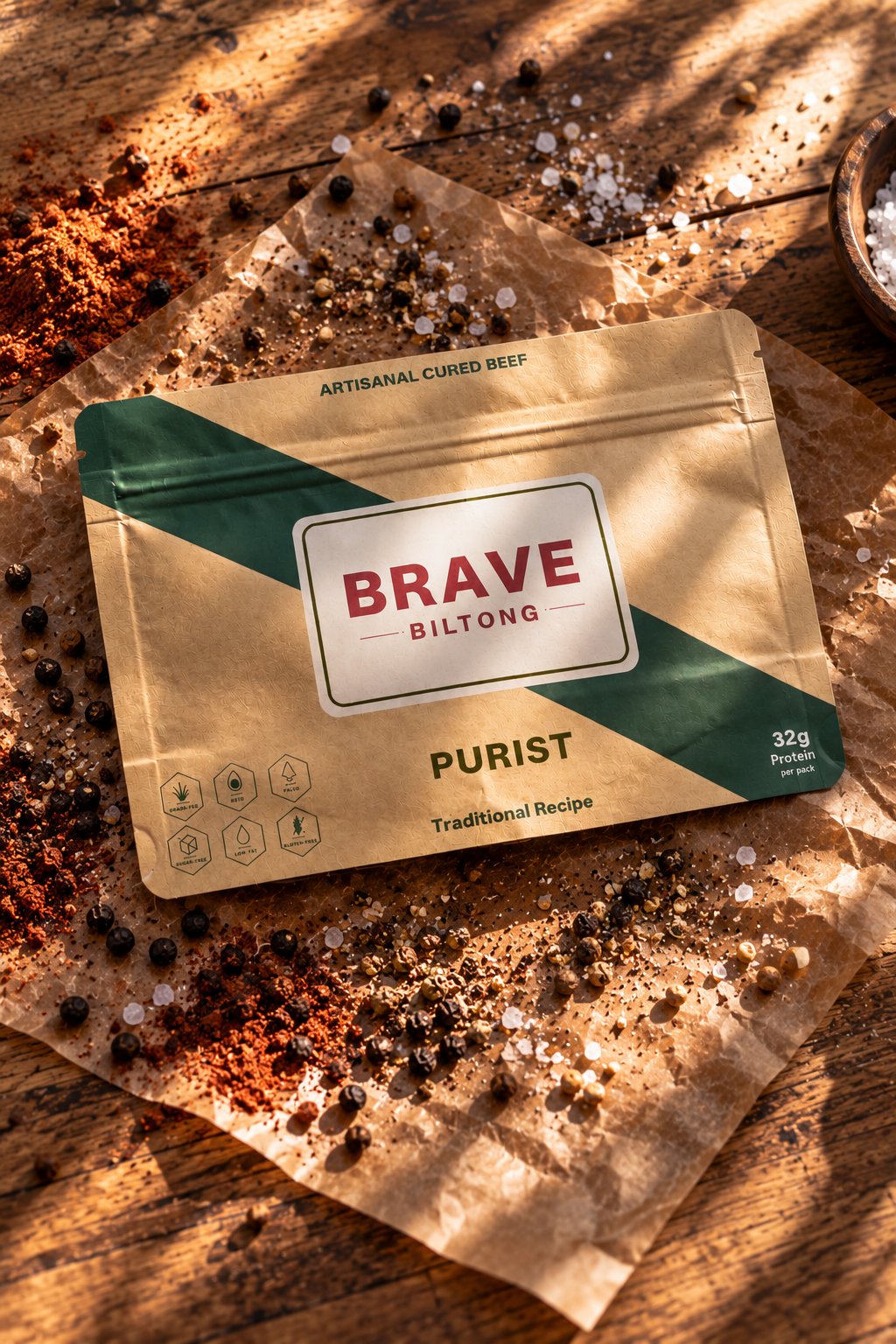
In a traditional South African biltong cure, coriander is the spice. More than the pepper, more than the salt. It’s what gives biltong that warm, citrusy, slightly nutty backbone that’s impossible to mistake for jerky. Iwan grew up on it. We toast ours before we crack it, the same way it’s been done in South African kitchens for generations. The heat wakes up the oils and brings the citrus forward.
If you’ve ever bitten into a piece of Brave Purist and wondered what that bright, almost lemony note is sitting underneath the beef — that’s coriander, and it’s come a very long way to get to you.
The Malabar Coast, India — Tellicherry Black Peppercorns
Keep going east. Cross the Arabian Sea and you land on the Malabar Coast of southwestern India, and the state of Kerala. Black pepper has been grown here for thousands of years. The Romans paid for it in silver…
Tellicherry is the highest grade of black pepper India produces. The peppercorns are left on the vine longer than standard pepper, allowed to fully mature until they’re larger, more aromatic, and packed with more piperine — the compound that gives pepper its bite. They’re named for the port town of Thalassery on the Kerala coast, where the trade was historically based. The hills above the port in the western slopes of the Ghats give the pepper its citrus and floral top notes the same way wine carries the place it came from.

In our cure, Tellicherry pepper does the work of cutting through the richness of grass-fed beef. It’s the bite that keeps biltong from ever feeling heavy.
Chihuahua, Mexico — Chipotle Powder
Back across the Pacific and down into northern Mexico, Chipotle peppers are made in the high desert state of Chihuahua. The technique itself is ancient. The Aztecs were smoke-drying jalapeños centuries before the Spanish arrived. The word “chipotle” comes from the Nahuatl chilpoctli: chil for chile, poctli for smoke.

It works like this: jalapeños are left on the vine well past green, until they’re deep red and starting to lose moisture. Then they’re moved to closed smoking chambers and slow-smoked over pecan or mesquite wood for several days. The result is a pepper that’s sweet, smoky, earthy, and complex — with a clean, moderate heat that builds rather than punches.
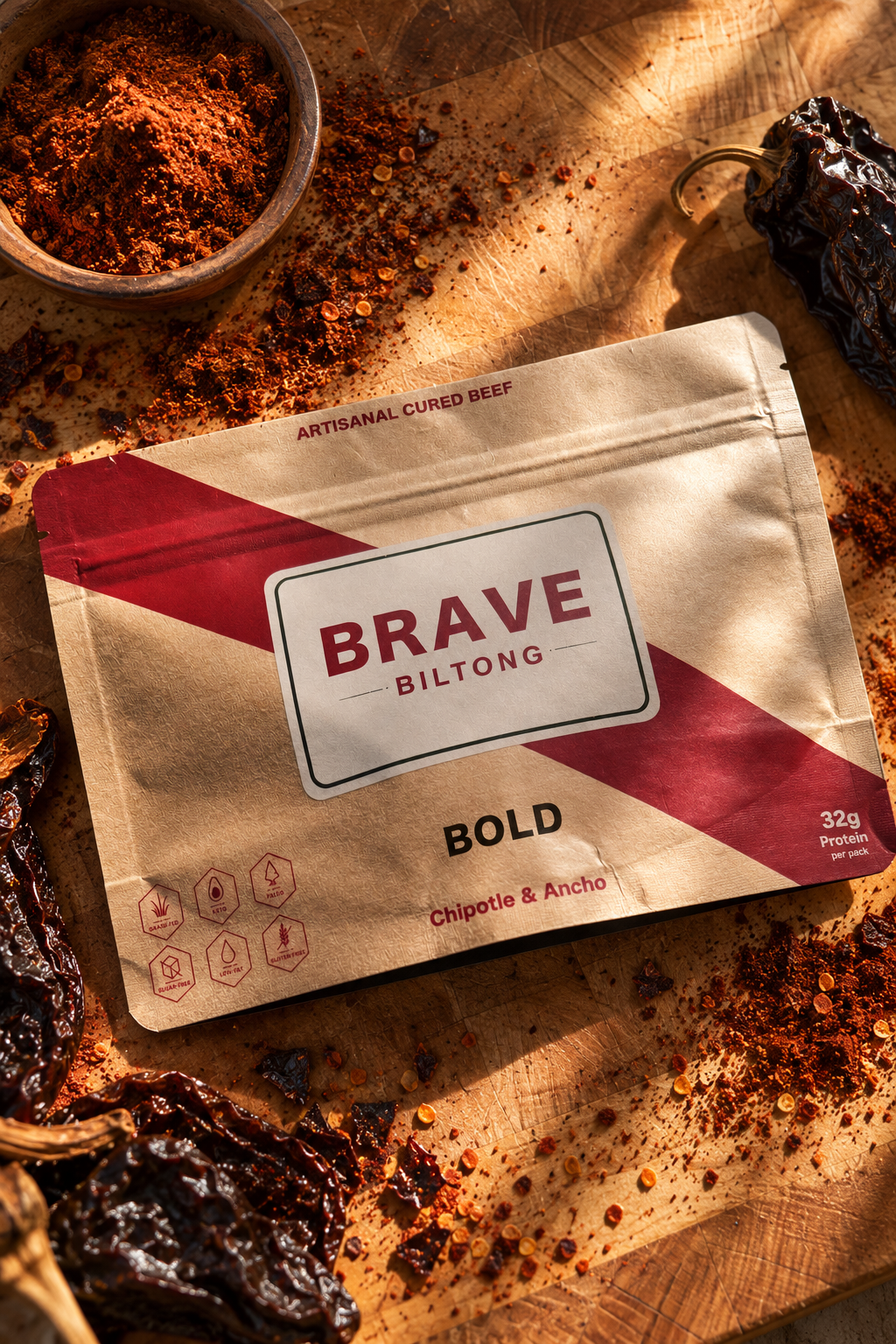
This is half the story of Brave Bold. The chipotle gives it the smoke and the warmth.
Puebla, Mexico — Ancho Powder
South from Chihuahua, past Mexico City, into the central highlands. The state of Puebla has been growing chiles since long before there was a Mexico. The poblano — literally “the one from Puebla” — was cultivated here before the Aztecs, in the mountains around Cholula. When the poblano is left on the vine to ripen all the way to deep red and then carefully dried, it becomes the ancho. The name means “wide” in Spanish, after the broad, heart-shaped pod the dried pepper forms.

Ancho is the soul of Mexican cooking. It’s what gives mole its depth, what rounds out a thousand sauces and rubs. It carries notes of dried fruit, raisin, even a little chocolate, with almost no real heat. It’s the spice you reach for when you want richness and complexity, not fire.
This is the other half of Brave Bold. The ancho is the depth, the dried-fruit richness, the long finish that follows the chipotle’s smoke. Together they’re the reason Bold tastes like nothing else on the market.
Last Stop: Tyler Hill, Pennsylvania
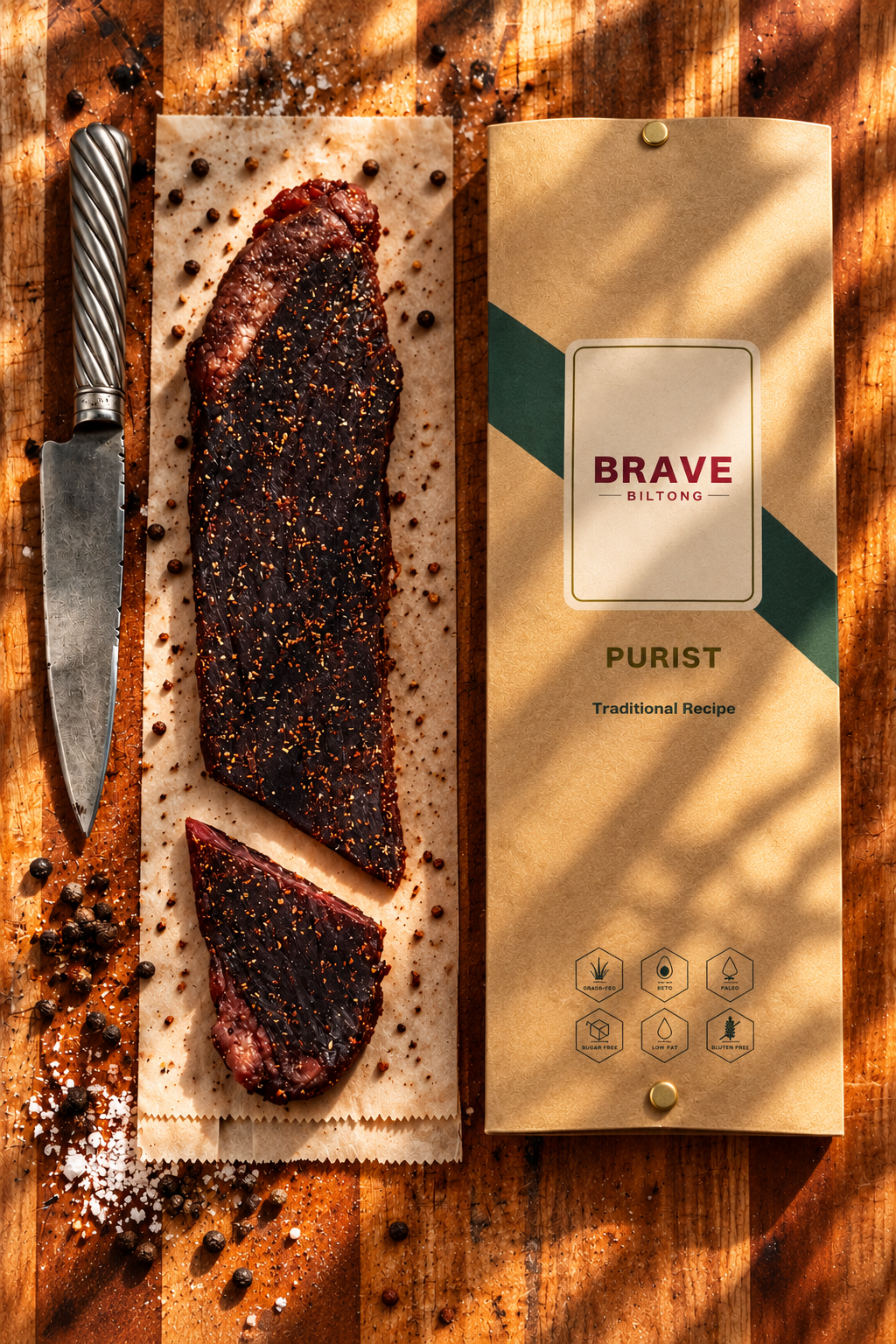
Santa Barbara vinegar. Sea of Cortez salt. Egyptian coriander. Indian pepper. Mexican chiles. And Pennsylvania beef from a USDA butcher just down the road from us in Wayne County. It all comes together here in Tyler Hill, in a small kitchen at the end of a gravel drive, where every batch gets sliced, weighed, dipped, spiced, hung, and watched over until it’s finally ready, for you.

Why This Matters to Us
Earth Day, for us, is about an honest accounting of where the things in your life come from and what kind of world they leave behind. Across the journey we just took together, there’s a beekeeper in Santa Barbara walking through an orchard at first light. There’s a salt harvester at the southern end of the Sea of Cortez, raking crystals out of an evaporation pond the way it’s been done for centuries. There’s a coriander farmer in the Nile Delta. A pepper farmer on a misty Kerala hillside. An artisan in Camargo tending a smokehouse fire through the night. A chile grower in Puebla saving seed from the best plants for next year, the way his family has done for generations. And a butcher in Wayne County, Pennsylvania, who knows us by name.

Every one of these livelihoods depends on a healthy planet in the most direct way possible. And each one of them is a crucial part of every pouch of Brave. That’s the real story of an ingredient list — not a column on the back of a package, but a chain of human beings working in concert with the land they care about.
The ride from Moab to Yellowstone where Brave was born showed us what we wanted to protect. The supply chain we’ve built since is our small attempt to be worthy of it. The people we buy from matter as much to us as the people we sell to. And the wild places that inspired this whole thing matter most of all.
So here’s to all the lands and hands that help us craft Brave Biltong. We’re all in this together.
Happy Earth Day from BRAVE.
— Alexander and Iwan
Waypoints around the world:
- Bragg Live Foods, Santa Barbara, California — 34.4208° N, 119.6982° W
- Baja Gold harvest ponds, Sea of Cortez, Mexico — 24.1426° N, 110.3128° W
- Mountain Rose Herbs, Eugene, Oregon — 44.0521° N, 123.0868° W
- Nile Delta, Egypt (coriander) — 30.8025° N, 31.0000° E
- Thalassery (Tellicherry), Kerala, India — 11.7480° N, 75.4929° E
- Camargo, Chihuahua, Mexico (chipotle) — 27.6769° N, 105.1697° W
- Cholula, Puebla, Mexico (ancho) — 19.0633° N, 98.3033° W
- Wayne County, Pennsylvania — 41.5775° N, 75.2580° W
- Brave Biltong, Tyler Hill, Pennsylvania — 41.7470° N, 75.1607° W